





Summary:
- Neurological Surgery Overall Competitiveness: High
- Research Importance: High
- USMLE Importance: High
- Importance of Attending Top 40 Med School: High
- Importance of Class Rank / Obtaining AOA (Med School Honors): High
Table of Contents
Is Neurological Surgery Competitive in 2022?
One way to assess the competitiveness of a specialty is to look at the match rate – the % of people who apply who end up matching into their preferred specialty. Among US Seniors, the unmatched percentage was 25.7%, making it moderately competitive among US residencies. The match rate for neurological surgery is considerably better than the most competitive specialties like plastic surgery, orthopedic surgery, or otolaryngology. However, neurological surgery is considerably more competitive than pediatrics, emergency medicine, child neurology, or even general surgery in the 2022 match. For more on the most competitive US specialties, see this article.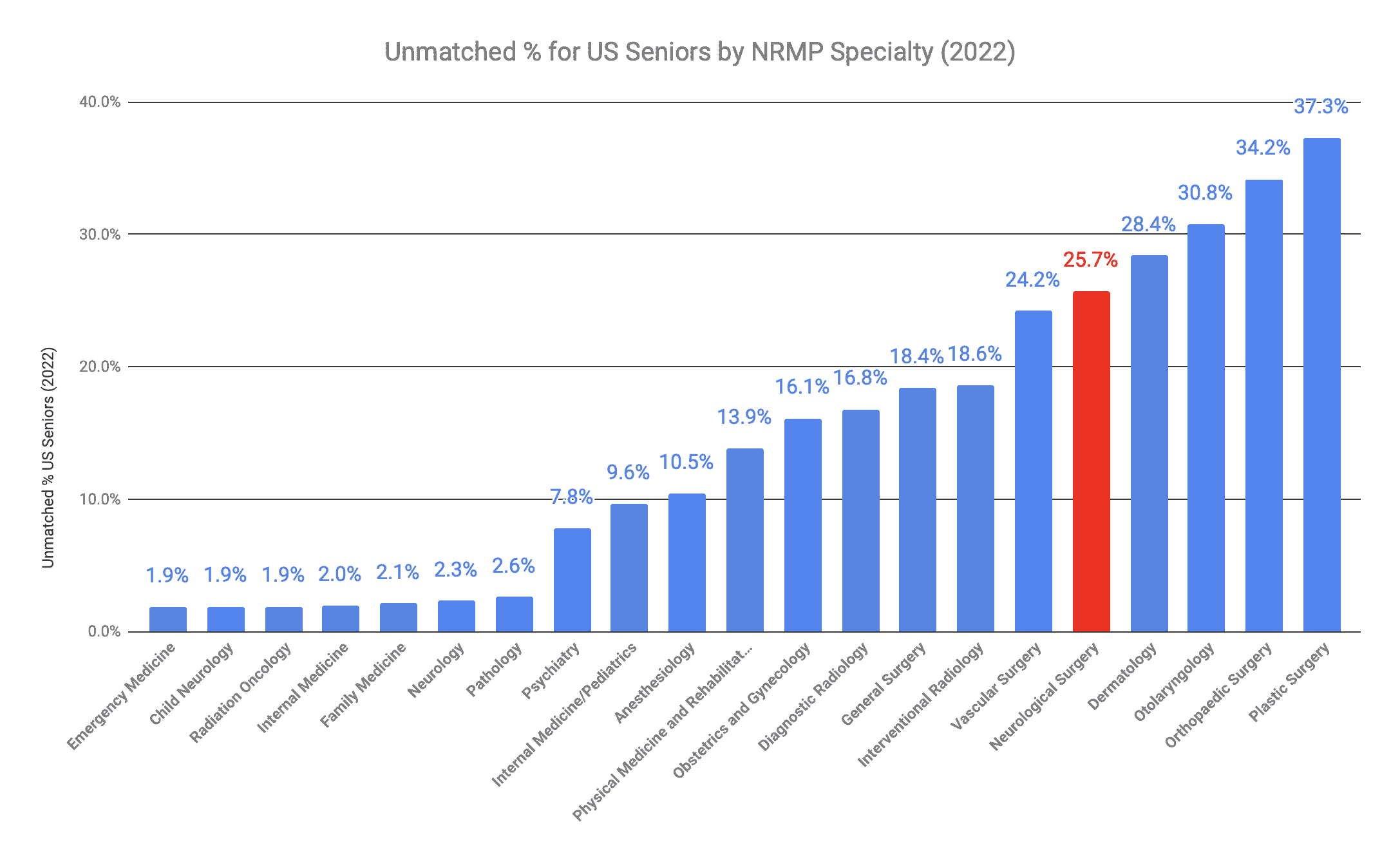
Neurological Surgery Match Rate
What is the Neurological Surgery match rate for US seniors, DO seniors, and IMGs? The “match rate” is the % of people who applied to a particular specialty as their preferred specialty who successfully matched into the specialty.- US Senior Neurological Surgery Match Rate (2022 Match): 74.3%
- DO Senior Neurological Surgery Match Rate (2022 Match): 43%
- US IMG Neurological Surgery Match Rate (2022 Match): 22%
- Non-US IMG Neurological Surgery Match Rate (2022 Match): 38%
Neurological Surgery Match Statistics 2022
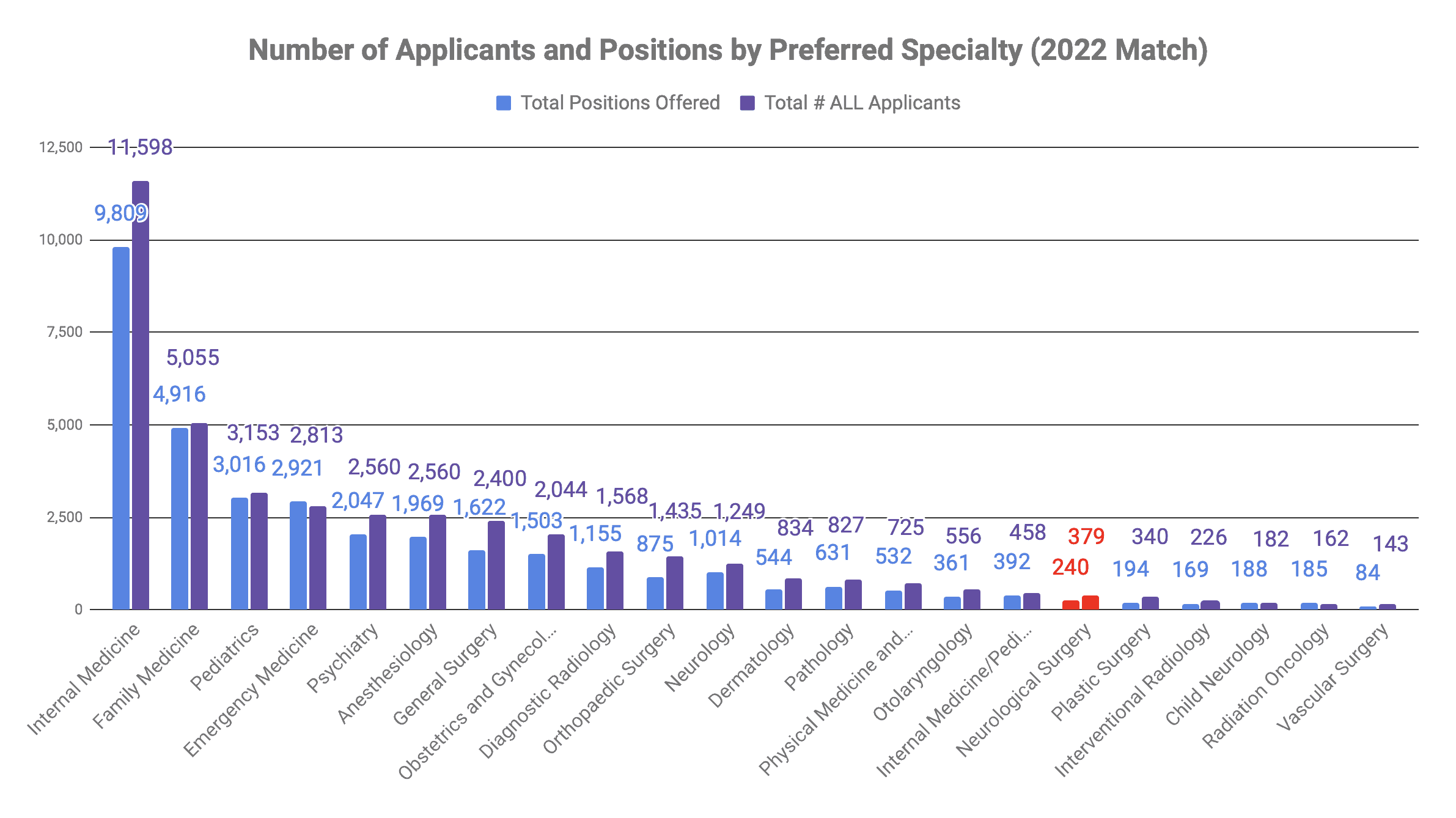
In 2022, there were 240 neurological surgery positions available in the NRMP match. A total of 379 applicants listed it as their preferred specialty. In the 2022 Match, neurological surgery ranked #17 out of 22 specialties for most total positions offered, behind:- Internal medicine: 9,809 positions
- Family medicine: 4,926 positions
- Emergency medicine: 2,921 positions
- General Surgery: 1,622 positions
- Neurology: 1,014 positions
- Pathology: 631 positions
How Many Applicants Receive Interviews in Neurological Surgery?
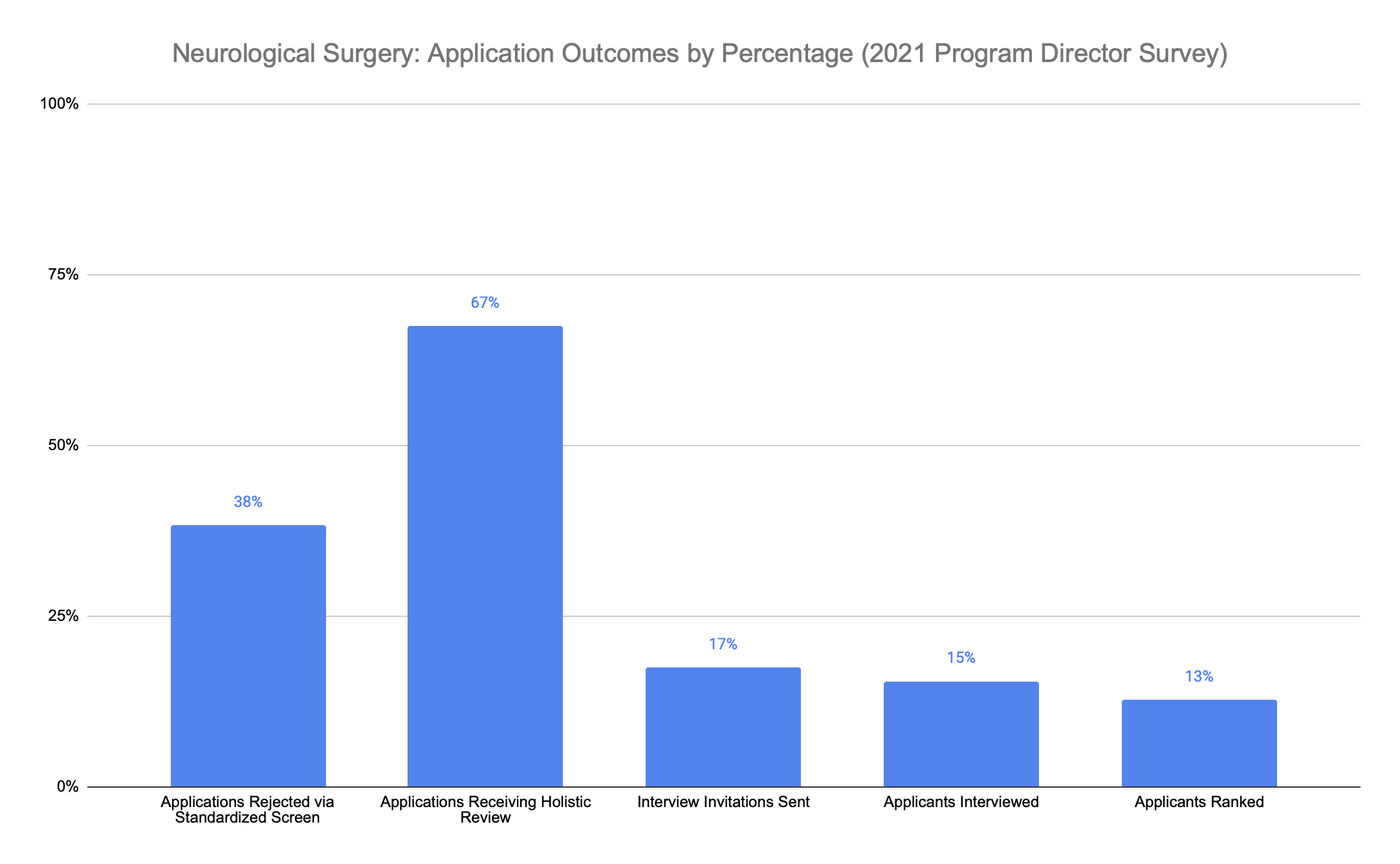
According to the 2021 Program Director survey, each Neurological Surgery program received 298 applications on average. Other data include:- Applications received (Neurological Surgery): 298
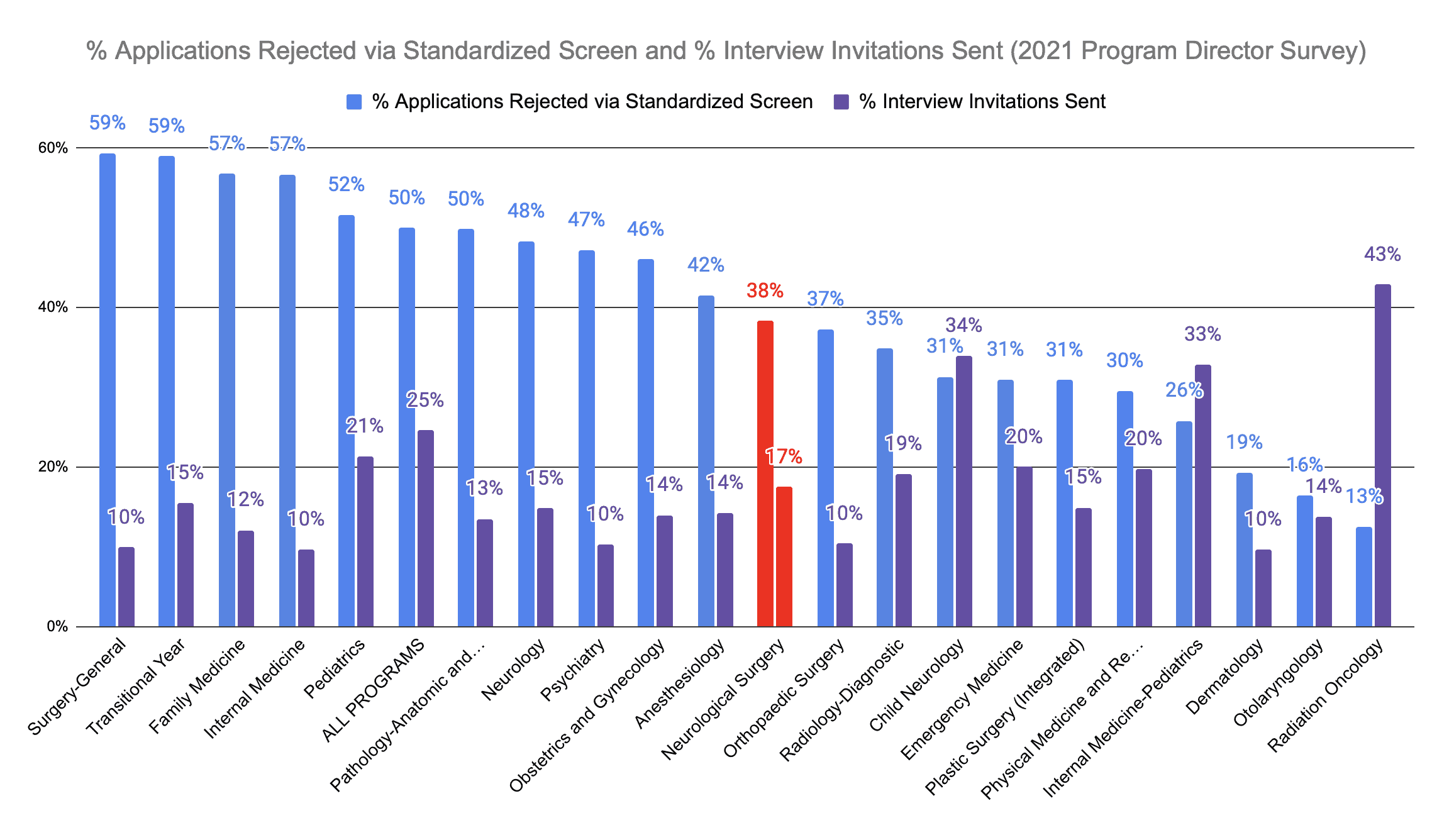
- Applications rejected based on standardized screen (Neurological Surgery): 114
- Applications receiving holistic review (Neurological Surgery): 201
- Interview invitations sent (Neurological Surgery): 52
- Applicants interviewed (Neurological Surgery): 46
- Applicants ranked (Neurological Surgery): 38
- 38% of neurological surgery applications were rejected via standardized screen,
- Only 67% of neurological surgery applications received a holistic review,
- 17% of neurological surgery applications received an interview invitation, and
- 13% of all neurological surgery applicants were ranked to match
Neurological Surgery is Moderately Reliant on Screens
Neurological Surgery relies on standardized screens to weed out applicants. In the 2021 Program Director Survey, neurological surgery PDs respondents reported that 38% of applications were rejected via standardized screen. This ranked near the middle of all residencies.USMLE Scores for Neurological Surgery
Step 1 scores for neurological surgery for matched US seniors reflect its moderate competitiveness. Neurological Surgery Step 1 Scores (Matched Applicants in 2022 Match):- 25%ile: 256
- Median: 249
- 75%ile: 241
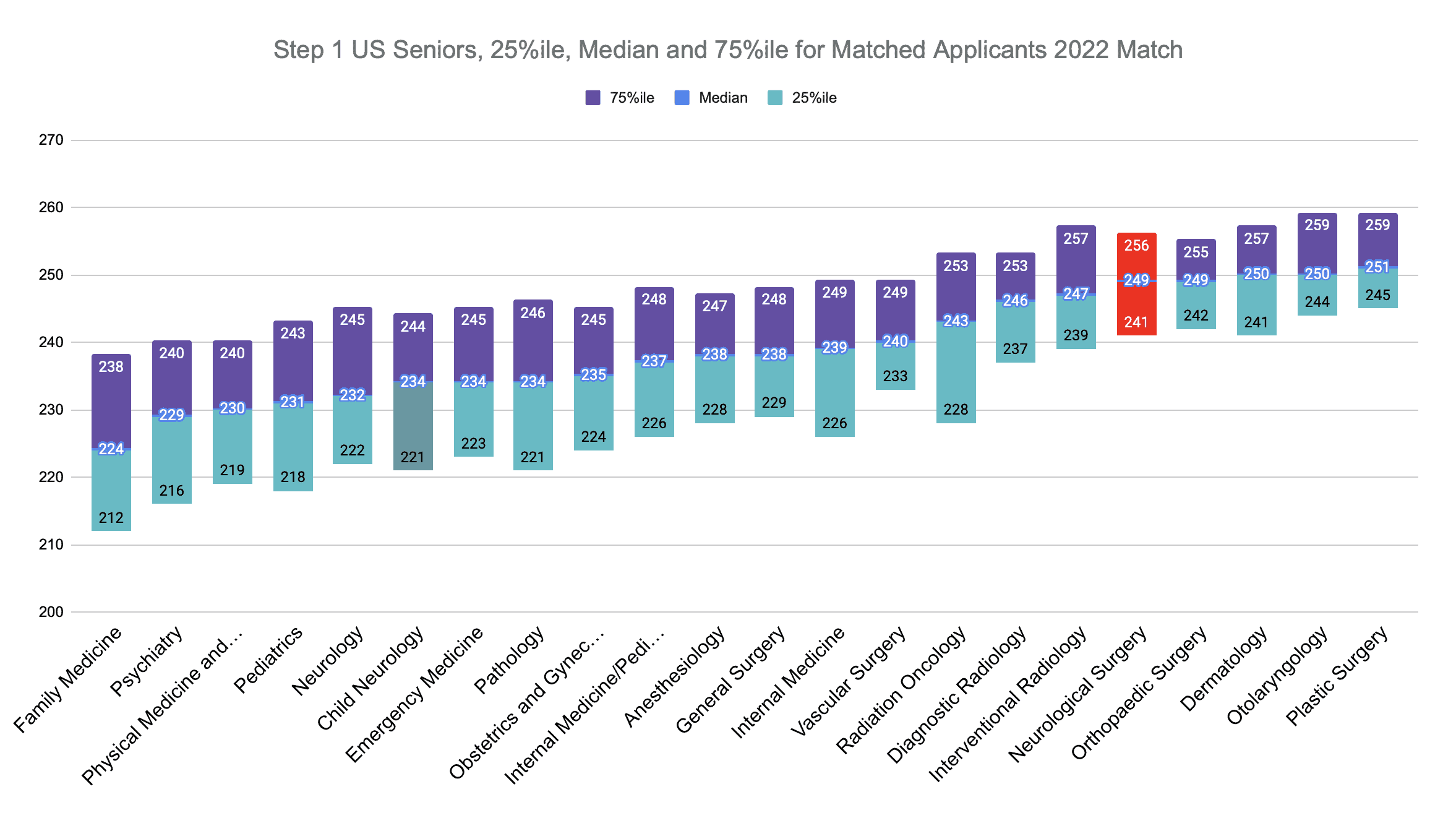
Step 1 Neurological Surgery Scores Are Middle of the Road (2022 Match)
- 25%ile: 261
- Median: 254
- 75%ile: 246
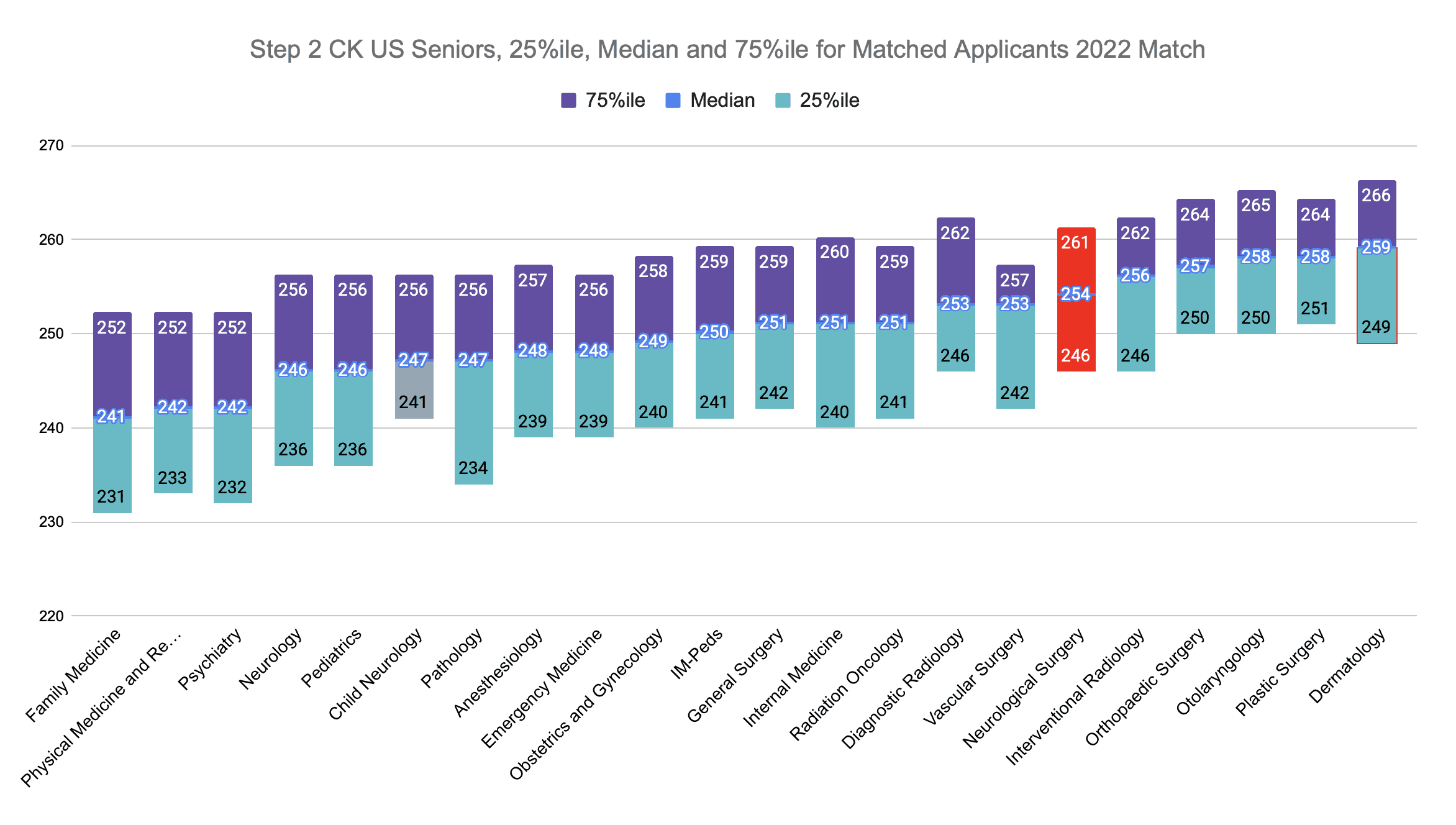
Step 2 CK Neurological Surgery Scores Are Middle of the Road (2022 Match)
Matching into Neurological Surgery as a DO
Matching into Neurological Surgery as a DO is moderately competitive, with a 43% match rate and 4% of spots filled by DO Seniors in the 2022 Match. In 2022, 21 DO seniors applied for Neurological Surgery; 9 matched.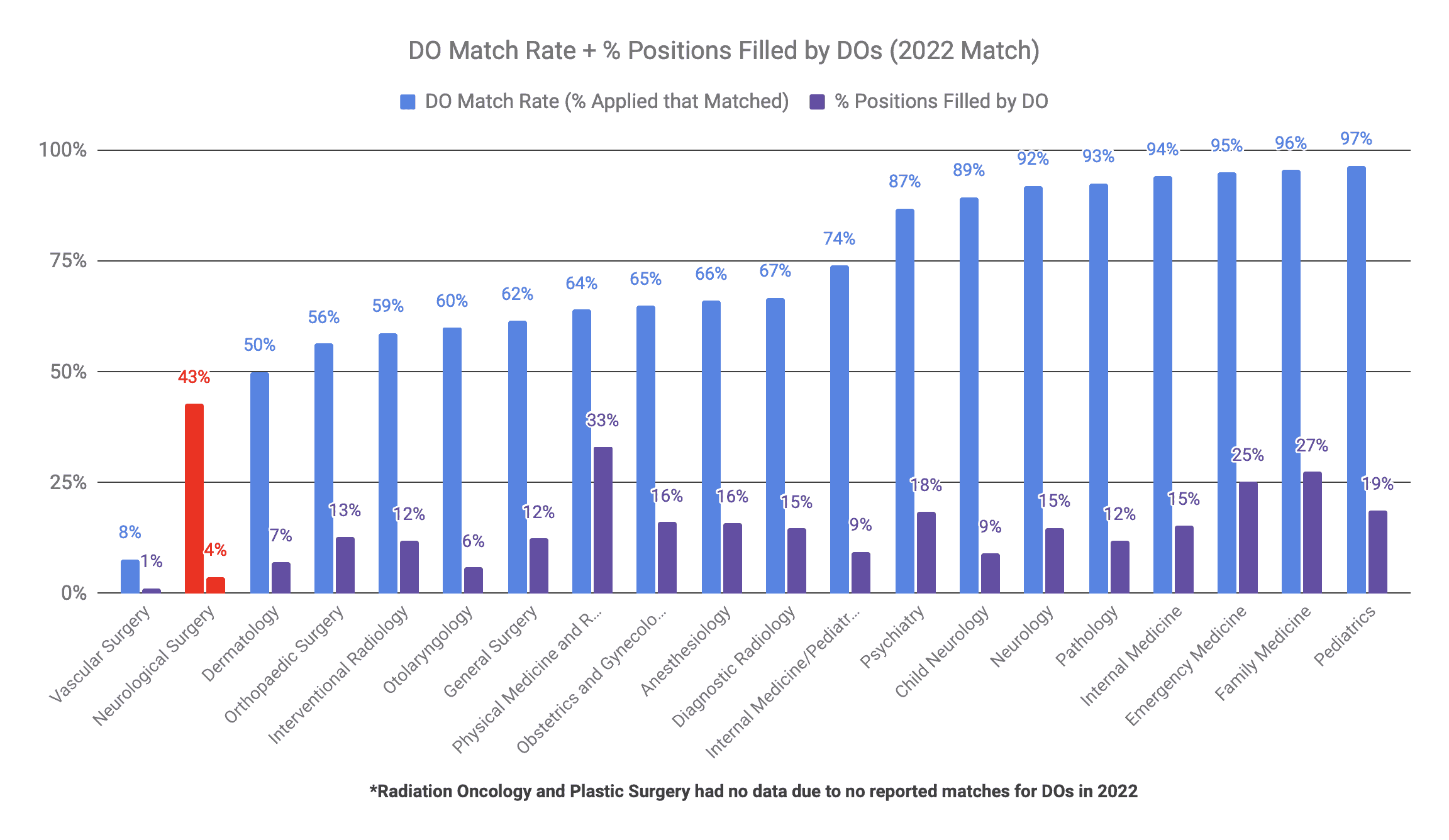
Neurological Surgery is Moderately DO-Friendly (2022 Match)
Is Neurological Surgery IMG Friendly?
Neurological Surgery is moderately IMG-friendly, with an overall 35% match rate and 8% of spots filled by IMGs in the 2022 Match. In 2022, 9 US IMGs and 42 non-US IMGs applied to Neurological Surgery; 2 US IMGs and 16 non-US IMGs matched.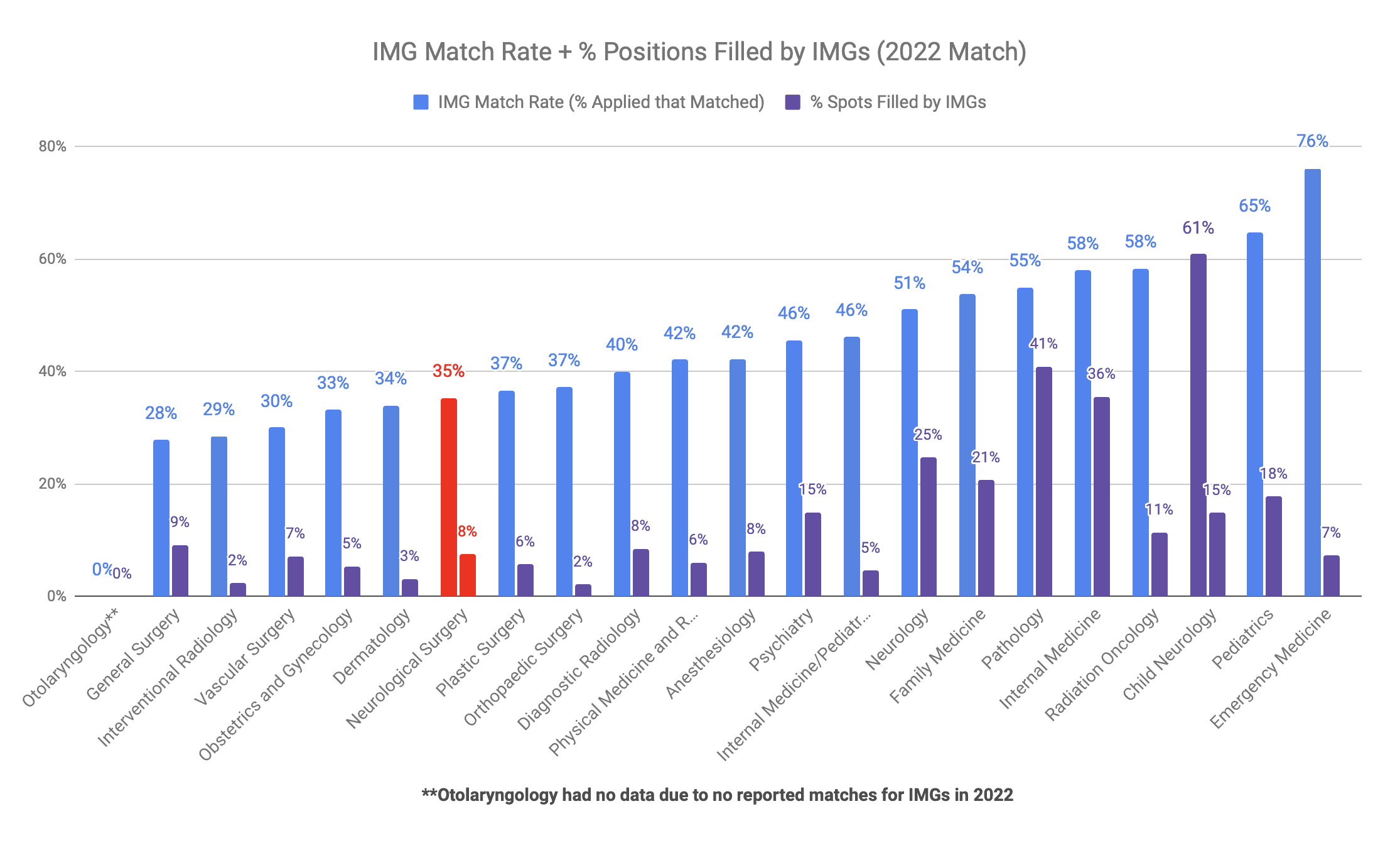
Neurological Surgery is Moderately IMG-Friendly (2022 Match)
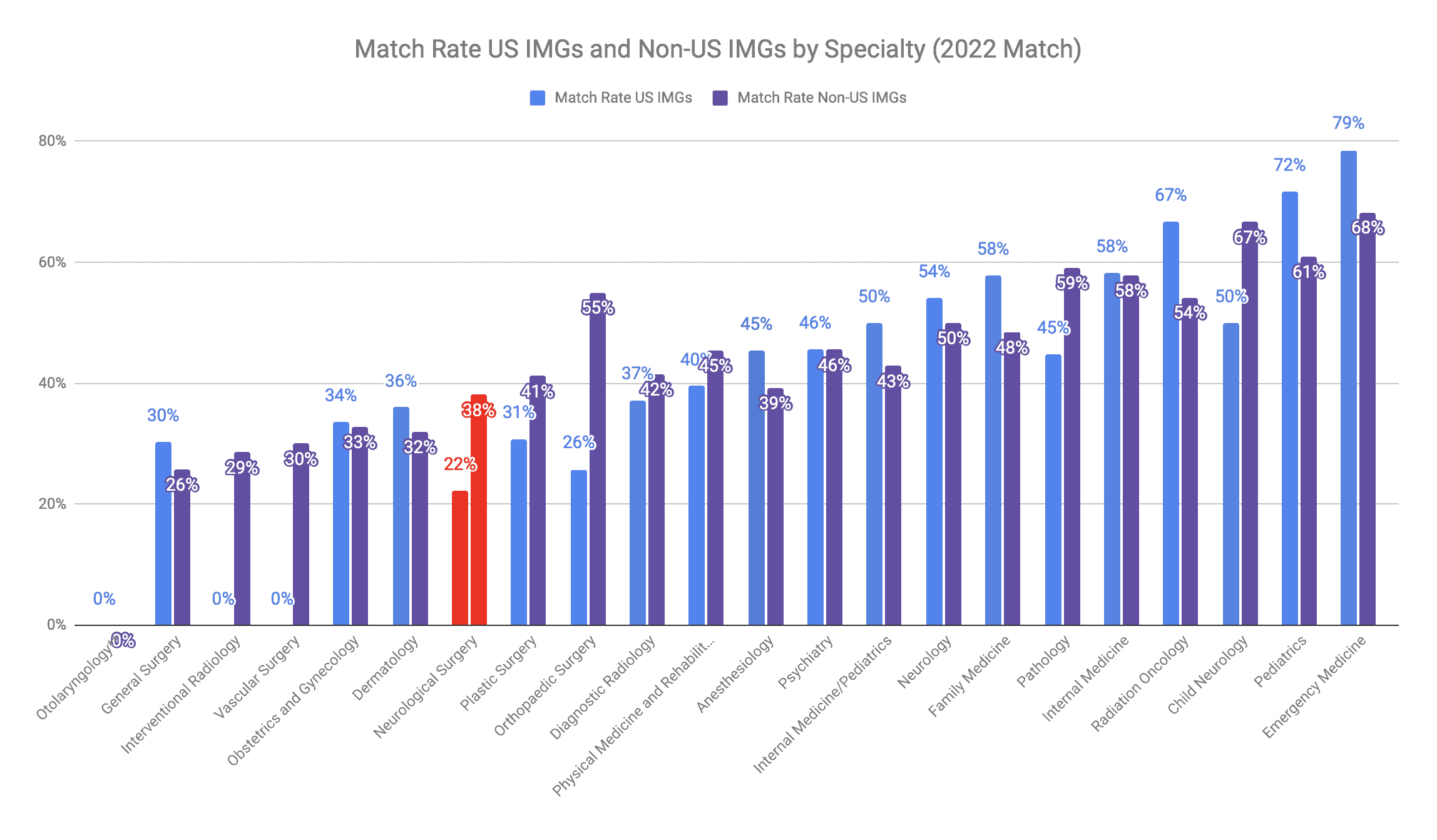
For Neurological Surgery, US IMGs had a slightly lower match rate (22%) than non-US IMGs (38%) in the 2022 Match
Neurological Surgery-Friendly IMG Residency Programs
For a list of the most IMG-friendly neurological surgery programs, see this article.How Much Do Neurological Surgeons Make per Year? Per Hour?
Neurological surgeons have an average annual salary of $601,000. This can vary dramatically based on practice setting, specialty training, and experience level.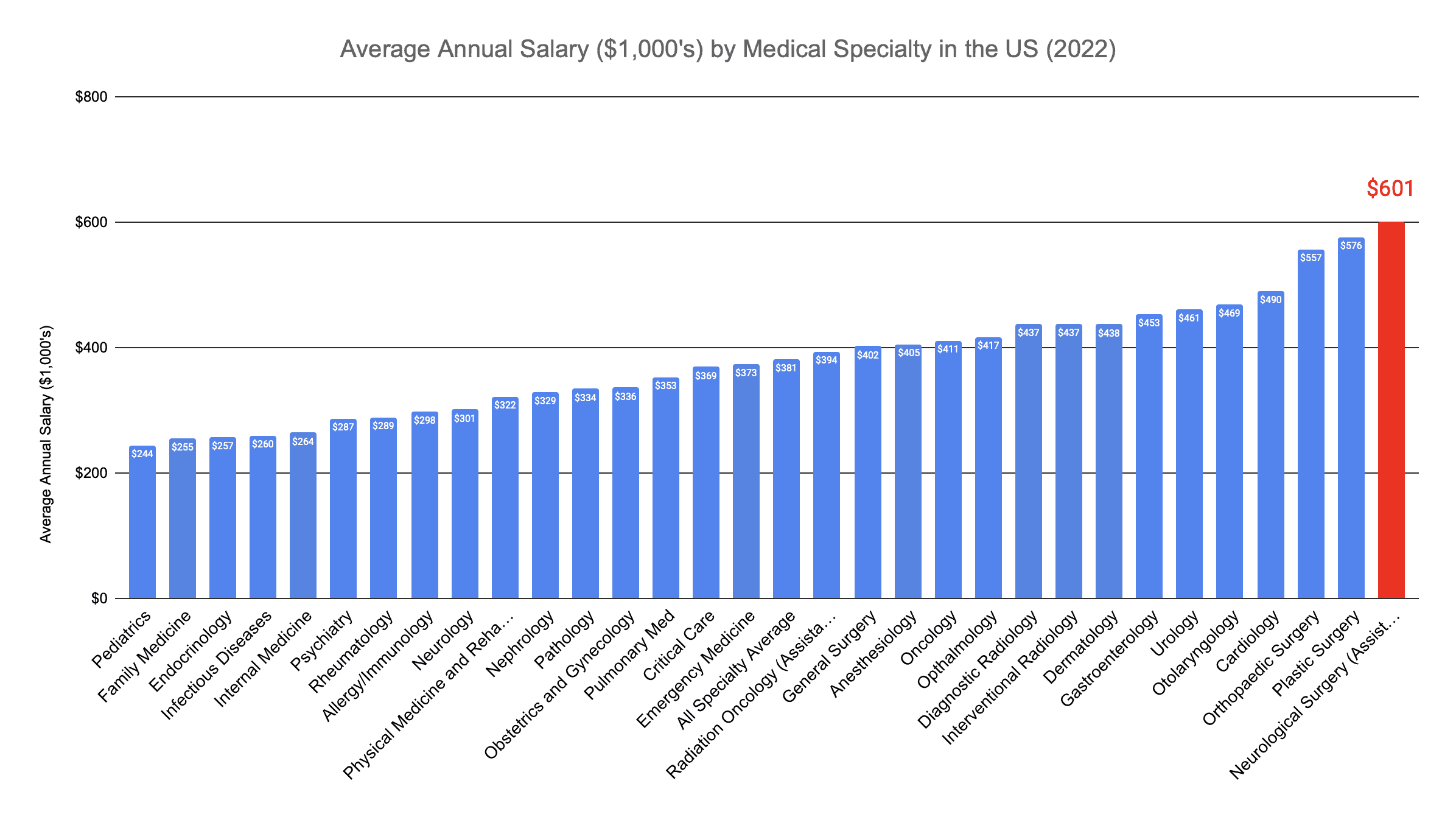
Neurological Surgeons make $601,000 per year on average
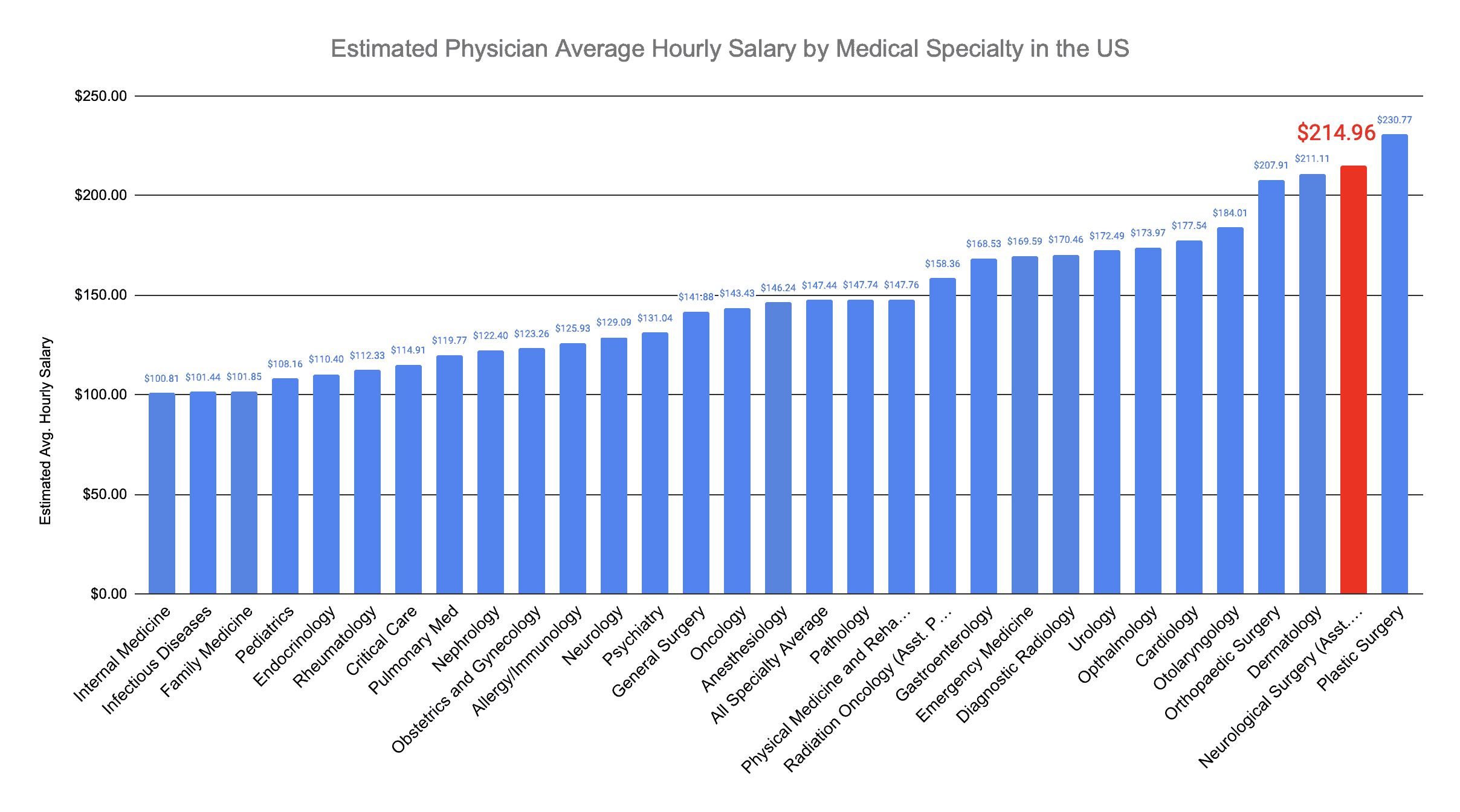
Neurological Surgeons make roughly $214/hr on average when taking in hours worked per year
How Important is AOA for Neurological Surgery?
AOA – Alpha Omega Alpha – is the med school honors society. Each school may elect up to 20% of the graduating class of students. Having AOA membership confers a greater advantage to matching into some specialties more than others. Often this AOA advantage is greatest for the most competitive specialties.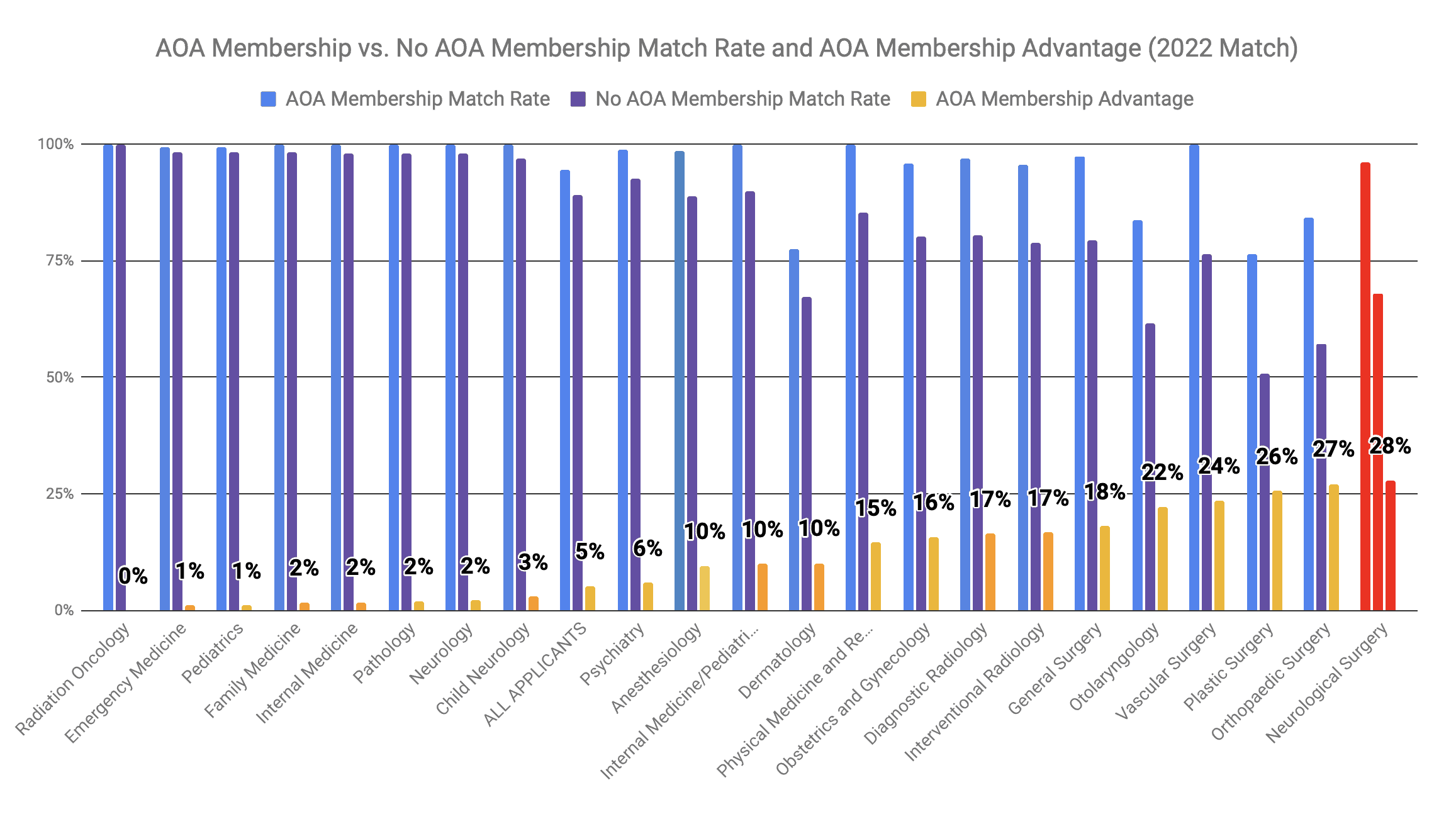
AOA membership correlated with a 28% match rate advantage for Neurological Surgery in the 2022 Match
How Many Publications for Neurological Surgery Residency in 2022
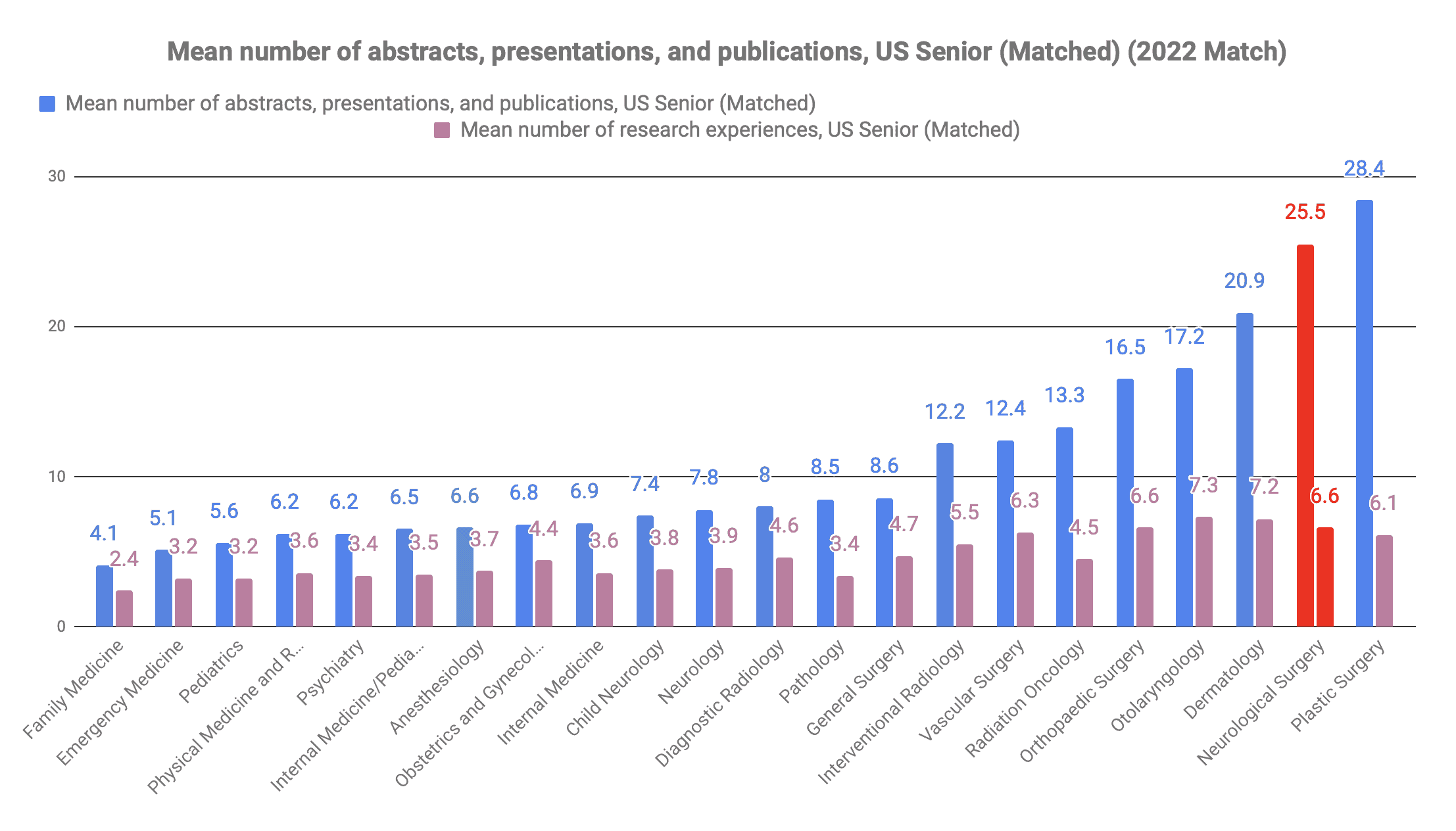
Research is an important characteristic for matching into many specialties, particularly the most competitive. So, how many publications do you need to match into a neurological surgery residency? In 2022, the mean number of abstracts, presentations, and publications for US seniors who matched into anesthesiology was 25.5. The mean number of research experiences was 6.6.Do I Need an MD-PhD to Match Into Neurological Surgery?
You may wonder how much an MD-PhD helps with matching into neurological surgery. It appears that having a PhD correlates with a slightly large advantage of 7% when applying into neurological surgery. Specifically, the match rate for those with a PhD is 7% higher than for those without one when applying into neurological surgery.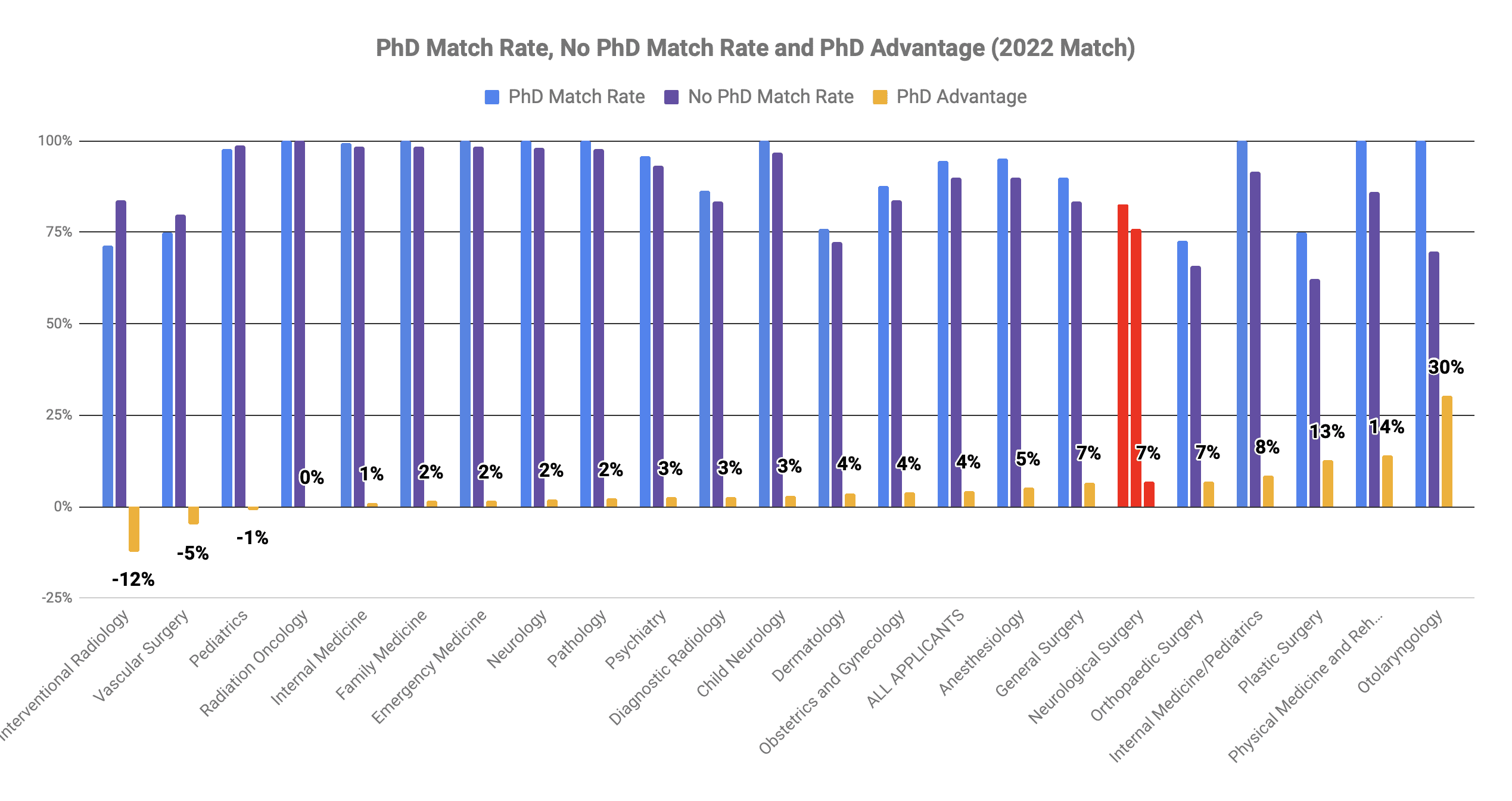
Having a PhD correlated with a 7% match rate advantage for Neurological Surgery in the 2022 Match
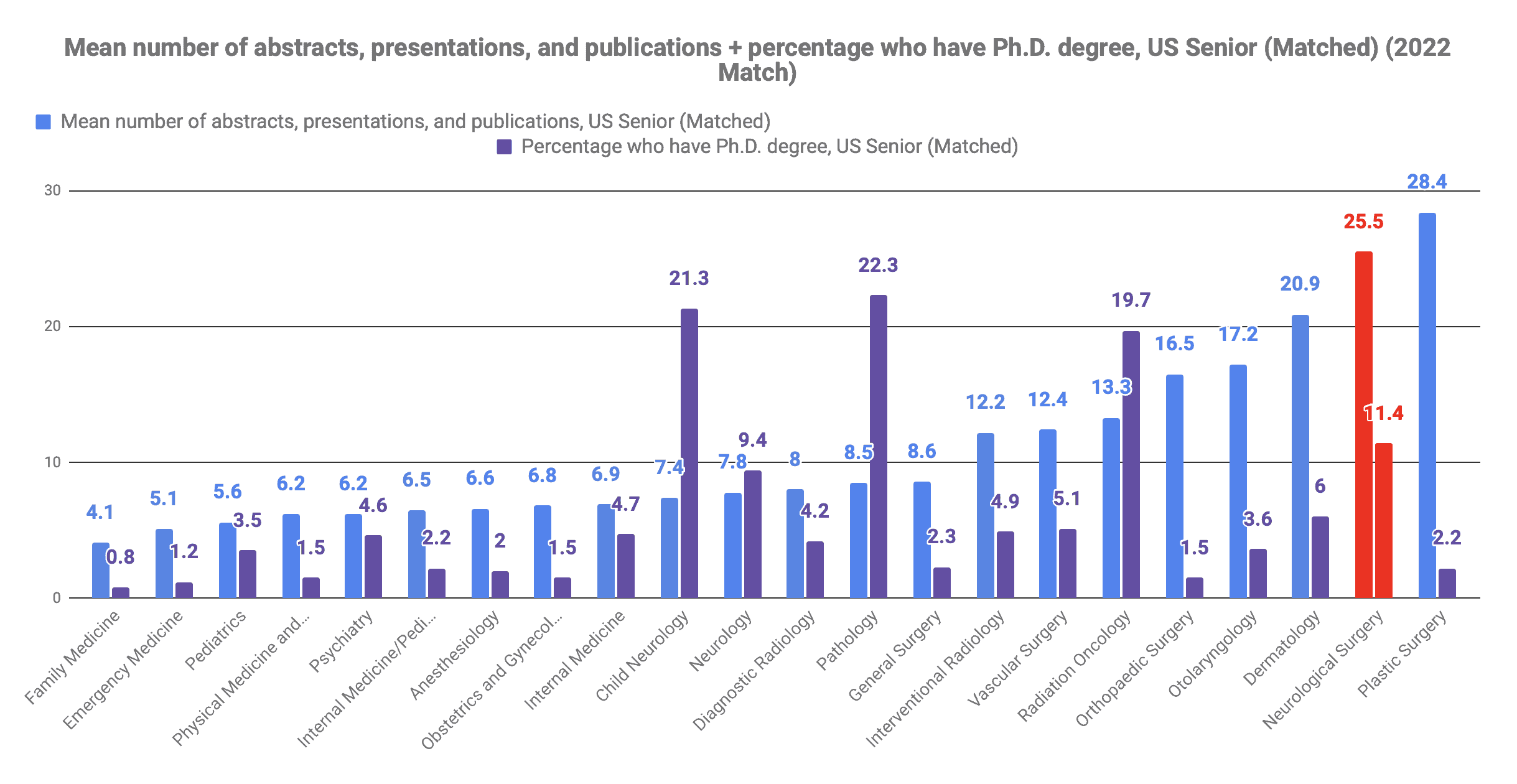
11.4% of matched applicants to Neurological Surgery had an MD-PhD in 2022
Should You Attend a Top Medical School to Match Into Neurological Surgery?
Does attending a top medical school help with matching into Neurological Surgery? According to the program director survey results above, 26.3% of Neurological Surgery PDs consider medical school reputation when considering whom to interview. The mean importance score was 4. Similarly, we can look at the advantage of attending a school in the top 40 by NIH funding. In 2022, there was a 21% advantage in match rate to those attending a school in the top 40 for NIH funding vs. those who did not.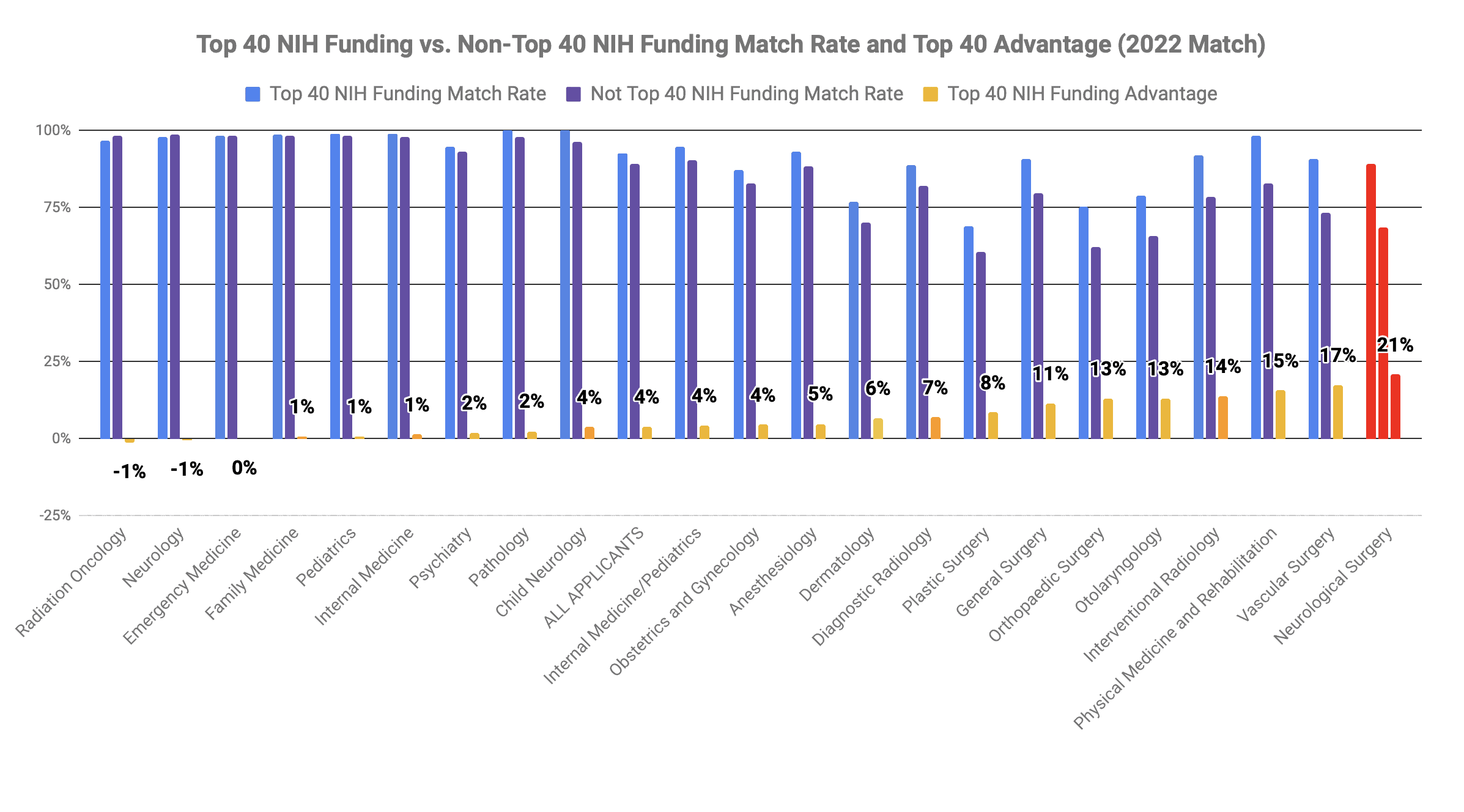
Graduating from a medical school ranked in the top 40 by NIH funding correlated with a 21% match rate advantage for Neurological Surgery in the 2022 Match
Does an MPH or MBA Help Match Into Neurological Surgery?
Medical training is long. Despite this, many consider – or complete – other degrees, like MPHs or MBAs. But how much of an advantage – or disadvantage – does an MPH (Master of Public Health) or MBA (Master of Business Administration) confer when applying into neurological surgery? Not much, it turns out. In fact, the match rate for US seniors with other degrees was 1% lower than the rate for those with other degrees. These statistics imply that having a second degree that isn’t a PhD doesn’t appear to help your chances of matching into neurological surgery, and may even hurt them (slightly).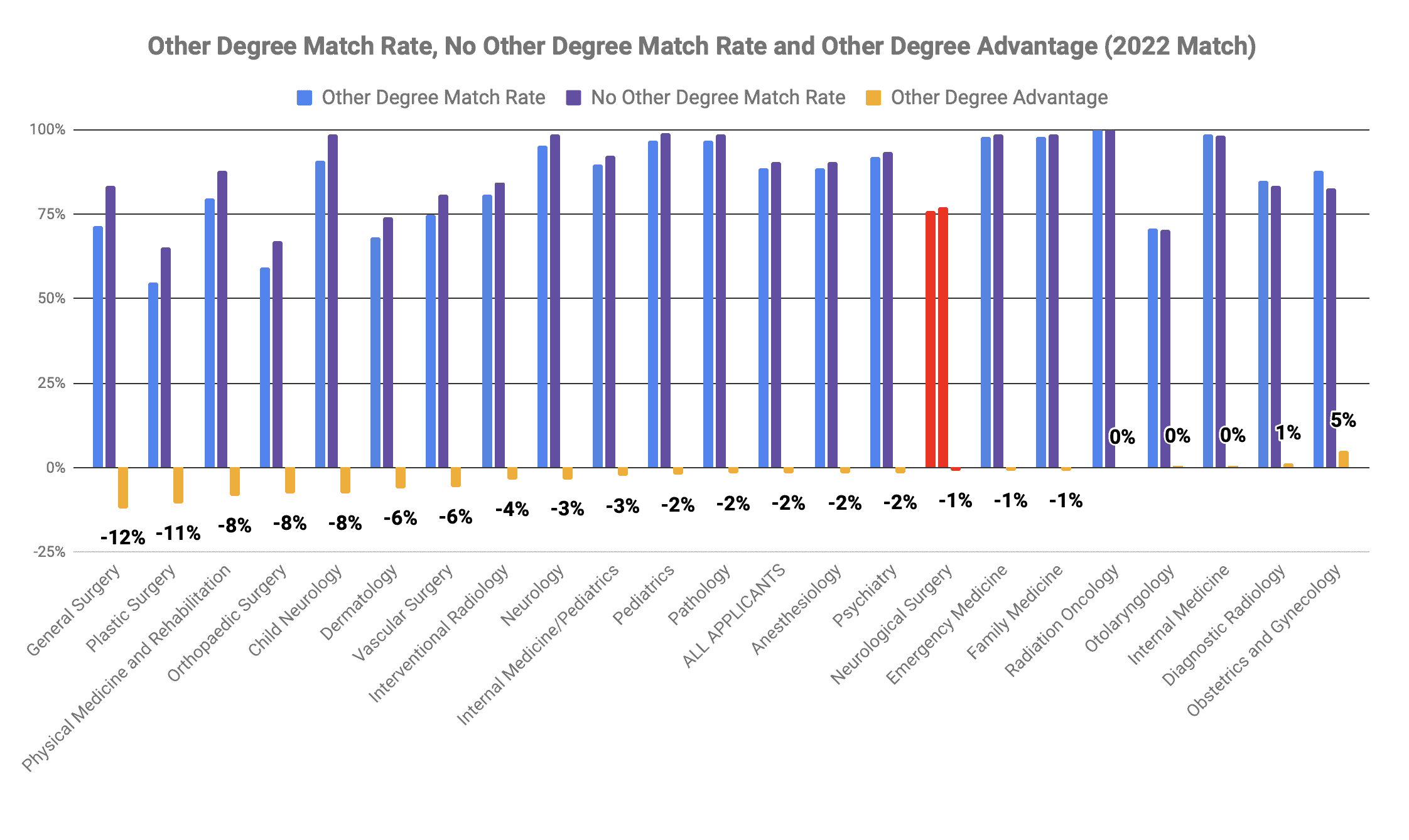
Having another degree like an MBA or MPH correlated with a -1% match rate disadvantage for Neurological Surgery in the 2022 Match
What Are the Best Neurological Surgery Programs?
While neurological surgery may be moderately competitive, the most desirable programs will always be extremely difficult to enter. So which are the best neurological surgery residency programs? Opinions will vary. However, some of the most desirable neurological surgery residency programs would include:- Massachusetts General Hospital
- University of California-San Francisco
- Brigham and Women’s Hospital
- Stanford Health Care
- Duke University Hospital
- Johns Hopkins University